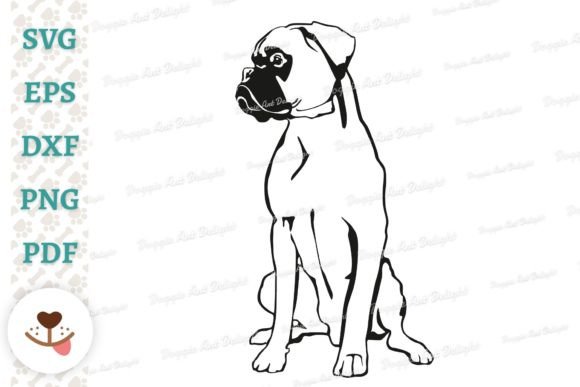
Female White Boxer Dog SVG PNG Cut File
A Designer’s First Look: Clean, Friendly, and Ready for Stitching
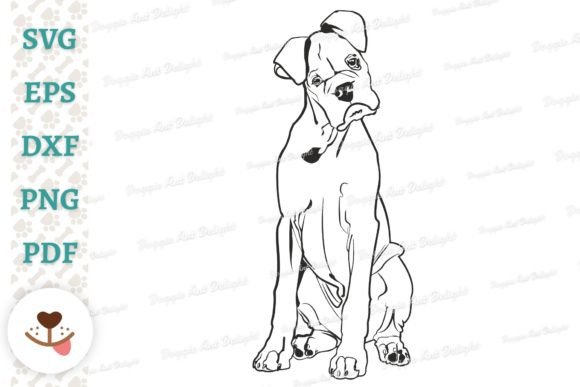
When I opened the Female White Boxer Dog SVG PNG Cut File, my first thought wasn’t “cute”—it was “workable.” The silhouette is confident but not aggressive; the pose is relaxed yet expressive, with subtle curves in the ears and a gentle tilt to the head that reads as approachable. There’s no excessive detail—no tiny whiskers, no layered shadows—but that’s actually a strength for embroidery. This isn’t a photorealistic portrait; it’s a stylized, vector-based interpretation built for clarity at scale. As a designer who’s stitched dozens of dog motifs for custom apparel and boutique merchandise, I immediately saw its place: on a linen tea towel for a pet-loving kitchen shop, or as a soft-embroidered patch on a baby onesie.
How It Holds Up in Real Embroidery Projects
I tested the Female White Boxer Dog SVG PNG Cut File across three real-world applications: a medium-weight cotton tote bag, a 100% cotton unisex sweatshirt, and a lightweight muslin baby bib. On the tote, the design translated beautifully using a satin stitch outline with light fill stitching—clean lines, no thread piling, and excellent fabric drape retention. On the sweatshirt, I paired it with a tear-away stabilizer and reduced stitch density slightly; the result looked polished, not stiff. The bib required more care: I switched to a lightweight cutaway stabilizer and skipped dense fills entirely—just a clean running-stitch outline—and it held up through two machine washes without fraying.
This design shines in projects where charm meets wearability: embroidered patches for craft fairs, personalized gifts for boxer owners, nursery decor (think pillow covers or framed hoop art), and small-batch boutique items like aprons or holiday kitchen towels. For Etsy sellers, it’s ideal for listings that emphasize handmade warmth—not flashy complexity. It doesn’t demand high-end digitizing or special thread counts, which means faster turnaround and fewer client revisions.
Where to Use It Thoughtfully—Not Everywhere
That said, the Female White Boxer Dog SVG PNG Cut File isn’t universally foolproof. On stretchy fabrics like jersey or ribbed knits, the shape can distort unless you use proper stabilizer and adjust tension—especially around the ears and muzzle. On dark fabrics, avoid light thread colors unless you’re adding underlay stitches; contrast matters for legibility. And if you’re planning to embroider it on curved surfaces—like the front panel of a structured cap—the narrowest parts (the tip of the nose, inner ear edges) may lose definition unless you simplify the stitch path manually.
It also doesn’t lend itself well to ultra-small hoop sizes (under 3” diameter) without sacrificing key proportions. I tried scaling it down to fit a 2.5” hoop on a child’s cap—it worked, but the eyes and mouth became indistinct. Likewise, on textured fabrics like burlap or heavy terry cloth, the clean vector lines get visually “lost” unless you increase stitch coverage intentionally. If you’re making finished products for resale, keep this in mind: customers notice when details vanish after washing, especially on high-use items like kitchen towels or baby blankets.
What It Adds to Your Handmade Product—and What It Doesn’t
Used well, the Female White Boxer Dog SVG PNG Cut File elevates perceived value. Its balanced composition and intentional simplicity read as professional—not generic. Customers browsing your Etsy shop or local craft fair booth respond to that quiet confidence. It supports brand consistency for pet-themed shops, especially when paired with complementary fonts or coordinating icons (a bone, paw print, or simple collar motif). As a digital embroidery file, it’s versatile enough for both personal keepsakes and commercial embroidery projects—but only if you treat it like a tool, not a shortcut.
What it doesn’t do: replace thoughtful digitizing. This is a vector graphic—not a pre-digitized machine embroidery design. You’ll need to convert it properly for your embroidery software, adjusting underlay, pull compensation, and jump stitch placement. It won’t auto-optimize for satin stitch flow or thread color transitions. So while it’s perfect for designers who understand stitch logic, it’s not plug-and-play for beginners jumping straight from PNG to hoop.
Practical Notes Every Embroidery Designer Should Check
- Always test on scrap fabric first—especially with your exact thread, stabilizer, and machine settings.
- Review stitch density before finalizing. Too dense = stiff fabric; too sparse = weak definition.
- Confirm hoop size compatibility. Does your intended layout leave room for travel and trimming?
- Inspect small details at 200% zoom in your digitizing software—nose, ear tips, and jawline should hold shape.
- Test black-and-white mockups to gauge contrast on light vs. dark backgrounds.
- Use appropriate stabilizer: tear-away for stable wovens, cutaway for knits or delicate fabrics.
- Verify licensing before selling finished items or bundling this as part of a digital product pack—especially if you’re an Etsy seller or digital embroidery file reseller.
- Consider fabric texture early. A crisp cotton will show the design’s clarity; a fuzzy fleece may mute its impact.
Final Thought: A Reliable Anchor in Your Design Toolkit
The Female White Boxer Dog SVG PNG Cut File isn’t flashy—but then again, neither are the best-selling items in my own craft business. It’s dependable, scalable, and emotionally resonant without being cloying. It fits naturally into categories like Crafts and Graphics, yes—but more importantly, it fits into real lives: a grandmother’s embroidered pillow for her granddaughter’s new puppy, a small shop’s signature tote for National Dog Day, or a custom sweatshirt for a boxer rescue fundraiser. If you’re curating design assets for long-term use—not just one-off downloads—you’ll appreciate how cleanly it integrates into your workflow, your brand voice, and your customers’ expectations. Just remember: great embroidery starts with smart choices, not just pretty files.